Según informa la edición digital del periódico El Pais, los investigadores del Consejo Superior de Investigaciones Científicas (CSIC) Manuel Ferrer y Ana Beloqui han descubierto el mecanismo, que permite sobrevivir en ácido sulfúrico al microorganismo Ferroplasma acidiphilum. El hallazgo sugiere que este microorganismo permanece inalterado desde los primeros pasos de la evolución y, según sus autores, puede ayudar a entender el origen de la vida en la Tierra. Las conclusiones del estudio aparecen en el número 445 de la revista inglesa Nature.
Ferrer, que trabaja en el Instituto de Catálisis y Petroleoquímica (CSIC), en Madrid, ha explicado que "una de las teorías más admitidas para reconstruir la génesis de la vida es que las primeras moléculas biológicas aparecieron en superficies repletas de hierro y azufre, los dos elementos que componen la pirita, muy abundante en la Tierra primitiva". "Estas vetas de pirita, donde Ferroplasma acidiphilum crece bien, pueden haber servido de catalizador para las primeras formas de vida. La primera célula de la que cobró vida la materia inanimada podría haber realizado muchos procesos químicos basados en la catálisis sulfa-férrica", ha añadido Ferrer.
Más información en: http://www.elpais.com/articulo/sociedad/Vivir/acido/sulfurico/elpepusoc/20070103elpepusoc_4/Tes
y en http://www.nature.com/nature/journal/v445/n7123/abs/nature05362.html
Nature 445, 91-94 (4 January 2007) doi:10.1038/nature05362

jueves, enero 04, 2007


miércoles, enero 03, 2007
PalArch's Journal of Vertebrate Palaeontology
Acaba de publicarse el número de Enero del 2007 de la revista electrónica PalArch's Journal of Vertebrate Palaeontology. La dirección electrónica es: www.PalArch.nl
Los contenidos son los siguientes:
Plas, van der, M. 2007. A new model for the evolution of Homo sapiens from the Wallacean islands.
Sachs, S. 2007. Book review of: Everhart, M.J. 2005. Oceans of Kansas: A Natural History of the Western Interior Sea. (Bloomington, Indiana University Press).
Beatty, B.L. 2007. Book review of: Herrel, A., T. Speck & N.P . Rowe. Eds. 2006. Ecology and Biomechanics: A Mechanical Approach to the Ecology of Animals and Plants. (Boca Raton, CRC Taylor & Francis).
Wedel, M. 2007. Book review of: Tidwell, V. & K. Carpenter. Eds. 2005. Thunder-Lizards: The Sauropodomorph Dinosaurs. ( Bloomington, Indiana University Press).
Nieuwland, I.J.J. 2007. Book review of: Videler, J.J. 2005. Avian Flight. ( Oxford, Oxford University Press ([Oxford Ornithology Series, edited by T.R. Birkhead. Volume 15]).
Los contenidos son los siguientes:
Plas, van der, M. 2007. A new model for the evolution of Homo sapiens from the Wallacean islands.
Sachs, S. 2007. Book review of: Everhart, M.J. 2005. Oceans of Kansas: A Natural History of the Western Interior Sea. (Bloomington, Indiana University Press).
Beatty, B.L. 2007. Book review of: Herrel, A., T. Speck & N.P . Rowe. Eds. 2006. Ecology and Biomechanics: A Mechanical Approach to the Ecology of Animals and Plants. (Boca Raton, CRC Taylor & Francis).
Wedel, M. 2007. Book review of: Tidwell, V. & K. Carpenter. Eds. 2005. Thunder-Lizards: The Sauropodomorph Dinosaurs. ( Bloomington, Indiana University Press).
Nieuwland, I.J.J. 2007. Book review of: Videler, J.J. 2005. Avian Flight. ( Oxford, Oxford University Press ([Oxford Ornithology Series, edited by T.R. Birkhead. Volume 15]).
Journal of Paleontological Techniches

Acaba de nacer una nueva revista con el nombre de "Journal of Paleontological Techniques". Esta editada por el Museo de Lourinha (Portugal). El ojbetivo de esta revista es publicar trabajos sobre la preparación de fósiles, incluyendo extracción de la roca, realización de moldes etc. Desde Aragosaurus le deseamos una larga vida. Os adjuntamos los objetivos de la revisa
"The Journal of Paleontological Techniques is totally free of charge and the first number can already be downloaded.The JPT comprehends new techniques and cutting-edge methodological approaches in:- Fossil preparation;- Digitalization and scanning;- Prospecting and data collecting;- Preservation and restoration;- Moulding and casting;- Illustration;- And any other paleontological technique".
Más información en: http://www.jpaleontologicaltechniques.org/index.html
Presentacion Naturaleza Aragonesa
El próximo martes día 9 de enero, a las 19,30 en el Salón de Actos de Multicaja, sito C/ Berenguer nº 2 de Huesca, se va a presentar el número 17 de la revista Naturaleza Aragonesa. Para todos aquellos que quieran asistir, la Sociedad de Amigos del Museo Paleontológico de la Universidad de Zaragoza pone un autobús gratuito, que saldrá del Edificio del Paraninfo (antigua Facultad de Medicina) a las 18 h , y, a las 21h se regresa a Zaragoza.
En este número hay un interesante artículo sobre los primeros descubrimientos de dinosaurios de España que se hicieron en Utrillas en el siglo XIX. También hay otro artículo sobre la inauguración del Museo del Oso de las Cavernas en Tella (Huesca). Ambos artículos muy recomendables
En este número hay un interesante artículo sobre los primeros descubrimientos de dinosaurios de España que se hicieron en Utrillas en el siglo XIX. También hay otro artículo sobre la inauguración del Museo del Oso de las Cavernas en Tella (Huesca). Ambos artículos muy recomendables
Retrato de un neanderthal
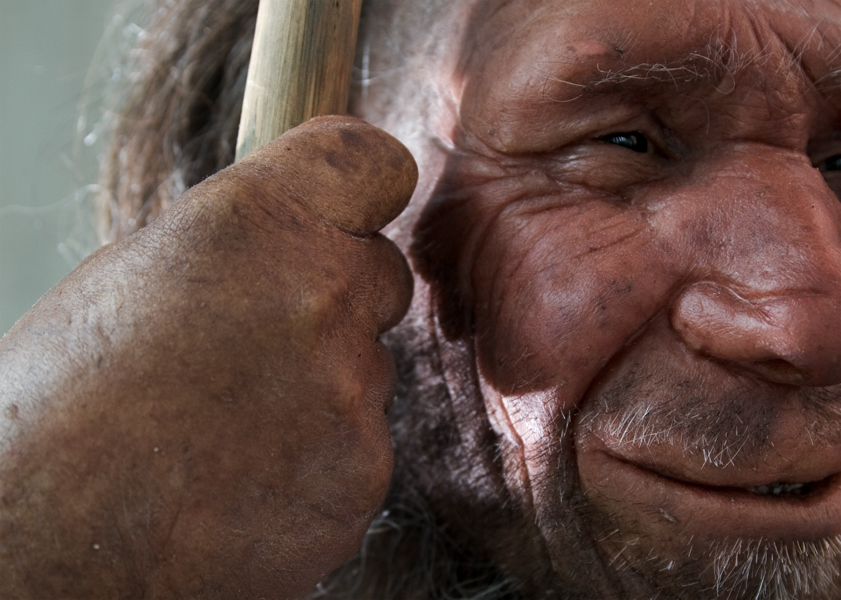
...que habla por si solo. La escultura de los hermanos Adrie y Alfons Kennis.
Si quereis ver mas sobre estos magníficos artistas mirar su página web: http://home.hetnet.nl/~alad/page2.html
lunes, enero 01, 2007
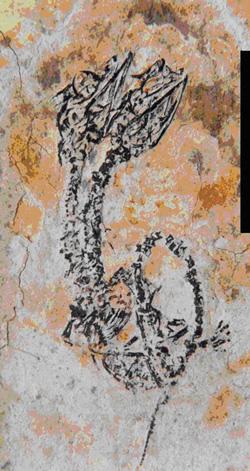
Encontrado un reptil de dos cabezas en el Cretácico Inferior
WeBlog Aragosaurus
El paleontólogo francés Eric Buffetaut y colaboradores acaba de publicar en la revista Biology letters un descubrimiento espectacular. Se trata de un embrión malformado de un reptil de la formación Yixian del noroeste de China. Es un pequeño esqueleto que presenta dos cabezas y dos cuellos bifurcados a la altura de la cintura escapular. Esta patología es bien conocida en reptiles actuales y se conoce como bifurcación axial, pero es la primera vez que se ha descrito en organismos fósiles.
martes, diciembre 26, 2006
Puesto de Trabajo en la IUCN

La IUCN (World Conservation Union) oferta un puesto de trabajo por dos años para su programa de áreas Protegidas. El contrato es por dos años y el contratado o contratada realizaría su labor en Gland (Suiza). Para los interesados adjuntamos la información que nos ha llegado:
UNESCO’s World Heritage Convention (WHC) is one of the most prestigious international agreements which aims to protect the world’s remaining natural and cultural places of outstanding universal value (OUV). The World Heritage (WH) List comprises those sites which both meet the rigorous criteria for OUV and that in principle should have the highest standards of care and management. Natural World Heritage sites are often considered as nature's “crown jewels” and include sites such as the Galapagos Islands, the Serengeti, and the Great Barrier Reef. IUCN has a key role in the World Heritage Convention as the Advisory Body for natural and mixed sites. In undertaking this role IUCN draws on its expertise within the World Commission on Protected Areas (WCPA) which has a global leadership role on protected areas issues. World Heritage is one of the Flagship Products of IUCN, which has a clear and important role as the Advisory Body for Natural and Mixed World Heritage properties under the World Heritage Convention. This role mainly involves four functions: (1) evaluating new natural and mixed properties which are proposed for inscription on the World Heritage List; (2) monitoring the state of conservation of existing natural and mixed World Heritage properties; (3) promoting a range of training and capacity building initiatives; and (4) providing guidance on the strategic implementation of the Convention. There is considerable potential for expanding this role to ensure that natural world heritage sites are used effectively to promote conservation and development efforts worldwide. IUCN’s role on World Heritage is led by the IUCN Programme on Protected Areas (PPA). Key activities are implemented in close coordination with UNESCO’s World Heritage Centre and other Advisory Bodies of the WH Convention and are financially supported by a contract with UNESCO. IUCN has recently taken a policy decision to strengthen its efforts in world heritage and the Special Adviser, World Heritage will play a key role in ensuring that the potential of world heritage is fully realized.
JOB DESCRIPTION
• Developing and implementing a Business Plan, with an associated project portfolio, to ensure that significant resources are raised to enhance IUCN’s capacity to work on World Heritage at global, regional and national levels;
• Ensuring the full potential of natural and mixed World Heritage sites as “flagships” for conservation is fully realized through the development of innovative project proposals;
• Supporting the IUCN evaluation process to ensure the highest professional standards are applied;
• Supporting implementation of the Cameron review , to ensure all recommendations are implemented in a timely and effective manner;
• Mobilizing and motivating experts within IUCN’s Global and Regional Programmes and expert networks, in particular WCPA, to ensure they are effectively contributing to IUCN’s work on World Heritage; and
• Maintaining close coordination with PPA/WCPA work to ensure synergy and complementarity with the PPA/WCPA Strategic Plan.
REQUIREMENTS
• Substantial and progressive international experience in heritage conservation and/or protected area management. At least 10 years' work experience would be expected. Relevant field experience is essential;
• Commitment, energy and vision in relation to heritage conservation;
• Proven track record in relation to project development and fundraising;
• High-level management and organizational skills;
• Outstanding communication skills, including informal (interpersonal skills and networking) and formal (presentation) skills;
• Dynamic and communicative personality;
• Relevant academic background, preferably in environmental management and/or natural resources conservation and management;
• Outstanding written and spoken fluency in English; skills in French and Spanish are highly desirable;
• Extensive experience working in cross-cultural and multi-disciplinary teams; and
• Willingness to travel and work non-traditional hours as required.
APPLICATIONS
Applicants who meet the qualification requirements are requested to submit at the latest by 31 January 2007 their curriculum vitae and a supporting letter of motivation in English, and the names and contact details of three referees (including one recent employer) to: Human Resources Officer The World Conservation Union (IUCN) Rue Mauverney 28, 1196 Gland, Switzerland Fax: +41 22 999 0339 E-mail: jobapplications@iucn.org
Suerte para los que se animen
domingo, diciembre 24, 2006
Al encuentro de los Titanes

Del 22 de Diciembre del 2006 al 17 de Febrero del 2007 se puede disfrutar con la exposición "Al encuentro de los Titanes" en la Sala FEC situada en el Camino de la Plata. Avda Castilla y León, 22. Burgos. La entrada es libre y gratuita y se puede visitar de lunes a sábado de 12.00 a 14.00 y de 18.00 a 21.00 horas. Esta exposición preparada por la Fundación para el estudio de los Dinosaurios en Castilla y León y el CAS hace un repaso a los dinosaurios en Castilla y León pudiendo disfrutar de ejemplares no mostrados hasta la actualidad y replicas que recrean a tamaño natural como serían algunos de estos titantes. Más información en http://www.fundaciondinosaurioscyl.com/es/portada/index.asp
Es una exposición muy recomendable
Suscribirse a:
Entradas (Atom)